Luxury Hardwood Flooring Checklist: What to Know Before You Buy
Choosing hardwood flooring for an exceptional home is about much more than selecting a color you like.
A floor becomes one of the largest design elements in a room. It influences the architecture, furniture, cabinetry, lighting, and ultimately the way the entire home feels.
At Chateau Napoleon, we believe luxury hardwood flooring should be selected with the same care given to stone, cabinetry, furniture, and other permanent architectural materials.
Before choosing your floor, here are some of the most important things to consider.
1. Where Will the Flooring Be Installed?
Start with the architecture.
Is this a large open-plan residence, a coastal home, a traditional estate, or a contemporary interior?
Consider the rooms where the hardwood will be installed, the amount of traffic they receive, the subfloor, climate, humidity, and whether the flooring will continue throughout multiple areas of the home.
These practical considerations should be understood before making decisions about species, construction, dimensions, and finish.
2. French Oak or Black Walnut?
The species of wood has an enormous influence on the finished floor.
French Oak
French Oak is one of the most versatile choices for luxury hardwood flooring. Its distinctive grain and natural character allow it to work beautifully in contemporary, traditional, and transitional architecture.
Depending on the finishing process, French Oak can range from pale and understated to warm, aged, smoky, or dramatically dark.
Black Walnut
Black Walnut creates an entirely different impression.
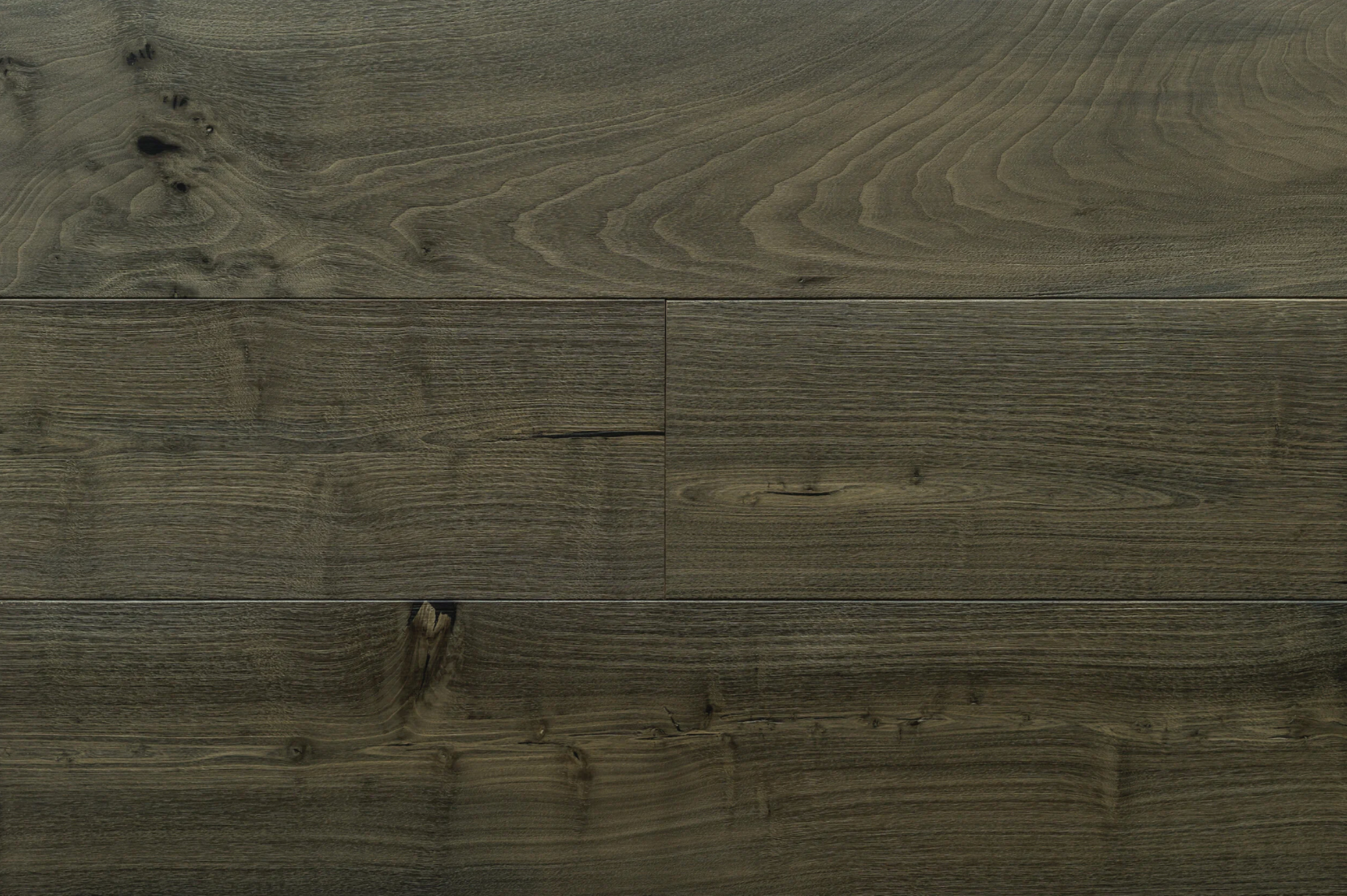
Its flowing grain and naturally rich coloration give it tremendous warmth and movement. It also responds extraordinarily well to Chateau Napoleon's French oxidation techniques, allowing us to develop remarkable variations in depth and color.
Neither is inherently better.
The right choice depends on the architecture and the feeling you want to create.
3. Consider the Color in the Actual Room
Never choose a hardwood floor based entirely on how it appears on a computer screen.
Natural wood changes considerably depending on the environment around it.
Look at your flooring alongside:
Cabinetry
Stone
Wall colors
Furniture
Natural daylight
Artificial lighting
A floor that appears relatively light in one home may look considerably darker in another.
This is why seeing a physical sample in the actual space is so important.
4. Think About Plank Width
Plank width can completely change the character of a room.
Traditional narrow flooring creates more lines across the floor, while wide plank hardwood flooring allows the natural grain and movement of each board to become much more visible.
In larger luxury residences, wider planks can create a beautiful sense of scale and continuity.
But bigger isn't automatically better.
The dimensions of the flooring should always complement the proportions of the architecture.
5. Understand the Grade of the Wood
Wood grading affects the amount of natural variation you will see.
Cleaner grades generally provide a more uniform appearance with fewer knots and variations.
Rustic grades intentionally celebrate more of the tree's natural character—knots, grain movement, mineral variation, and other characteristics that make each plank individual.
One isn't necessarily more luxurious than the other.
Luxury is about selecting the right material for the design.
A beautifully executed rustic French Oak floor can be every bit as sophisticated as a cleaner, more restrained floor.
6. Pay Attention to Texture
Texture is sometimes overlooked when flooring is selected from photographs.
But once installed, texture has a significant influence on how the floor interacts with light and how it feels underfoot.
A smoother surface can create a more refined and contemporary appearance, while a more textured surface emphasizes the natural character and age of the timber.
The important thing is that the texture feels intentional and appropriate for the architecture.
7. Look Beyond Conventional Stain
Color is not simply about choosing a stain from a chart.
At Chateau Napoleon, our approach to creating color is one of the things that distinguishes our floors.
Our French oxidation techniques interact with the natural characteristics of the timber rather than simply covering the surface with pigment.
Because every piece of wood is different, the reactions create natural variations in tone and depth.
That variation is part of the beauty.
Instead of making every plank look identical, we allow the character of the wood to remain visible.
8. Understand Your Subfloor and Installation
Before ordering flooring, understand what is underneath it.
Concrete and plywood subfloors can require different installation methods. The construction of the flooring, moisture conditions, radiant heating, floor height, and architecture of the building should all be considered.
For significant residential projects, we strongly recommend discussing these details with an experienced hardwood flooring installer before installation begins.
A beautiful material deserves an equally careful installation.
9. Consider How the Floor Will Age
Natural wood is a living material.
Light, use, environment, and time will gradually influence its appearance.
Rather than expecting a natural hardwood floor to remain completely unchanged, consider how beautifully made flooring will develop character as the home is lived in.
This is part of what separates genuine hardwood from materials designed merely to imitate it.
10. Don't Choose Flooring from a Photograph Alone
This may be the most important advice we can give.
Photography is excellent for discovering ideas, but it cannot fully communicate the grain, texture, depth, variation, and finish of real wood.
Screens also reproduce colors differently.
Before making your final decision, place a physical sample in your home.
Look at it in the morning.
Look at it in the afternoon.
Place it beside your cabinetry, stone, fabrics, and furniture.
You may be surprised by how much the character changes throughout the day.
What Makes Luxury Hardwood Flooring Different?
We believe the word luxury should describe the material and craftsmanship—not simply the price.
True luxury hardwood flooring begins with exceptional timber.
But it also depends on the selection of the wood, its dimensions, grading, texture, finishing process, installation, and how all of those elements work with the architecture.
At Chateau Napoleon, we specialize in French Oak and Black Walnut flooring created for homes where the floor is intended to become part of the architecture.
Our collections combine natural materials with European craftsmanship and distinctive French finishing techniques to create floors with remarkable depth, variation, and character.
Before You Buy: A Simple Checklist
Before making your final selection, ask yourself:
Is French Oak or Black Walnut better suited to the architecture?
Have I considered the natural light in the room?
Does the color complement the cabinetry, stone, and furniture?
Is the plank width appropriate for the scale of the space?
Do I prefer cleaner or more rustic wood character?
What texture best complements the design?
Is the flooring appropriate for the subfloor and installation conditions?
Have the installer and flooring supplier discussed the project requirements?
Have I seen the actual flooring sample in person?
If you can confidently answer these questions, you are much closer to selecting a floor you will appreciate for many years.
Experience Chateau Napoleon Before Making Your Decision
Luxury hardwood flooring should be seen and touched before it is selected.
Request a complimentary hand-cut Chateau Napoleon sample and experience the natural grain, texture, color, and depth of our French Oak and Black Walnut collections in your own space.
Because when choosing a floor for an exceptional home, the details make all the difference.