
Black Walnut Hardwood Flooring: What to Know Before You Buy
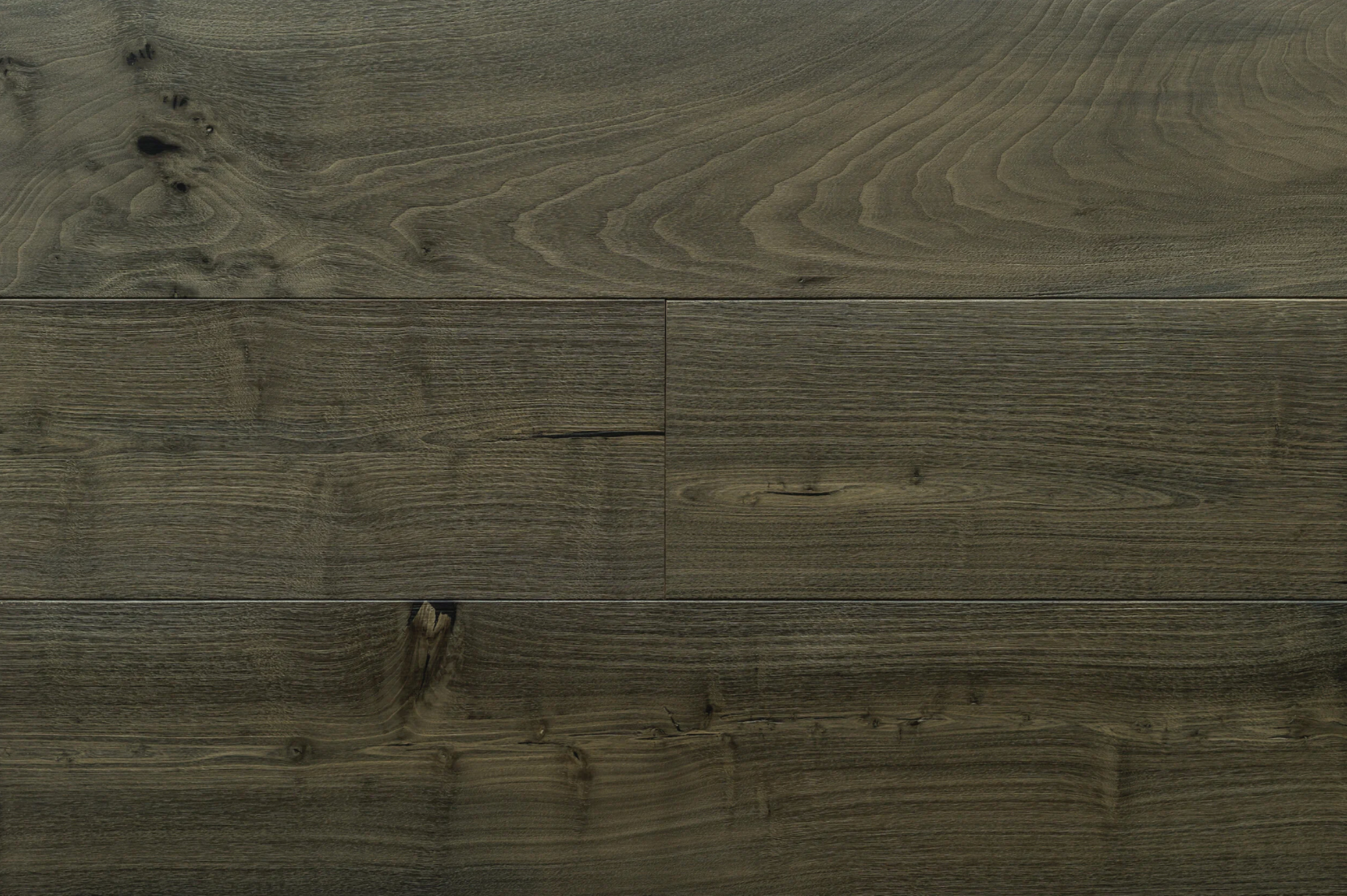
Black Walnut is one of the most distinctive hardwood species available for residential flooring. Its rich coloration, expressive grain, and natural warmth can create a floor that becomes an important part of the architecture of a home.
At Château Napoléon, American Black Walnut flooring has always held a particularly important place in our collections.
We have produced and delivered hundreds of thousands of square feet of Walnut flooring over the years, and it remains our preferred species for many of our French oxidized finishes because of the extraordinary reactions we are able to achieve with the wood.
If you are considering Black Walnut hardwood flooring for your home, there are several things I believe you should understand before making your decision.
What Is American Black Walnut Flooring?
American Black Walnut is a genuine hardwood species prized for its deep natural coloration and distinctive grain.
Unlike many lighter hardwoods, Walnut naturally contains considerable variation. Individual boards can range from warm brown and caramel tones to deep chocolate colors, with lighter areas occasionally appearing throughout the floor.
I consider this variation an advantage rather than a defect.
A beautiful natural hardwood floor should not look as though every plank came from a printing machine. The variations are part of what give genuine wood its character.
When properly selected and arranged, those differences create depth and movement throughout a room.
What Does Black Walnut Flooring Look Like?
One of the greatest attractions of Black Walnut flooring is that it can assume remarkably different appearances depending upon how it is finished.
Natural Walnut has a warm, sophisticated character that works beautifully in both traditional and contemporary interiors.
But Walnut becomes particularly interesting when we begin working with oxidation.
American Black Walnut is our preferred species because of the beautiful reactions we achieve using our French oxidation techniques.
These techniques were originated in France, and I introduced them to the U.S. market.
Rather than simply applying a conventional stain over the surface, oxidation reacts with the characteristics of the wood itself. The resulting colors can possess extraordinary depth and variation.
There is no other species that we work with that is transformed quite so radically and beautifully through these methods.
This is precisely why our Cendré line of Black Walnut flooring has historically been one of our best sellers.
Is Black Walnut Good for Hardwood Flooring?
Yes.
There is a common misconception that American Black Walnut is not dense enough to be used successfully as hardwood flooring.
Our experience has been very different.
Château Napoléon has made and delivered hundreds of thousands of square feet of Walnut flooring over the years, with virtually no follow-up complaints concerning excessive damage.
Walnut is a hardwood, although it is not among the hardest hardwood species available.
American Black Walnut has a Janka hardness rating of approximately 1,010 pounds, while American Red Oak, for comparison, is approximately 1,290 pounds.
Does this difference matter?
Certainly—but perhaps not as dramatically as some people imagine.
If you drop a sufficiently heavy object onto either floor, both species can dent. Walnut may simply show somewhat more indentation because it is softer.
For most normal residential environments, this has not prevented Black Walnut from performing beautifully.
Does Black Walnut Flooring Scratch Easily?
Any genuine hardwood floor can scratch.
This becomes particularly important in homes with large dogs.
If a large dog's nails are allowed to become long, they can eventually scratch through a floor's finish and create small grooves in the wood itself.
Because Walnut is softer than Oak, this effect may become apparent sooner.
But the solution is not necessarily to abandon the wood you love.
Regular nail maintenance, appropriate protection, and proper care can greatly reduce the possibility of this type of damage.
I have always preferred to explain this honestly to our clients rather than pretend that any natural hardwood floor is indestructible.
You are purchasing genuine wood. It will live with the home, and over many years it will naturally develop character.
Solid Black Walnut Flooring vs. Engineered Black Walnut Flooring
Another important decision is whether the project calls for solid Black Walnut flooring or an engineered construction.
Solid flooring is manufactured from a single piece of hardwood.
Engineered hardwood uses a genuine hardwood surface over a structurally designed core.
The correct choice depends upon the individual project.
Subfloor conditions, climate, installation method, plank dimensions, radiant heating, and architectural requirements can all influence which construction makes the most sense.
For a luxury residence, I would not choose between solid and engineered flooring simply because one sounds more prestigious.
Choose the construction that performs best for the environment in which the floor will actually live.
Consider the Width and Length of Your Flooring
Plank dimensions have an enormous effect on the final appearance of a room.
This is particularly true with Black Walnut.
Wide plank Black Walnut flooring allows more of the natural grain and coloration of each board to remain visible. Instead of breaking the floor into many narrow strips, wider planks allow the wood itself to become a more prominent architectural feature.
In large living spaces and open-plan luxury homes, the effect can be spectacular.
However, plank dimensions also affect material selection, manufacturing, installation requirements, and price.
This is why width and length should be considered during the specification process rather than after the flooring has already been selected.
Understand Black Walnut Flooring Prices
When shopping for Black Walnut hardwood flooring, you will encounter a considerable range of prices.
Do not assume that two products labeled "American Black Walnut" are therefore equivalent.
The final cost can be influenced by:
Lumber quality and grading
Plank width and length
Solid or engineered construction
Finishing process
Custom coloration
Surface treatment and distressing
Project specifications
Installation requirements
For an important residence, I recommend comparing what you are actually receiving rather than simply comparing the lowest price per square foot.
A beautiful hardwood floor may remain in your home for decades.
Black Walnut Flooring and Sunlight
Natural wood changes with time.
Black Walnut is no exception.
Exposure to natural and ultraviolet light can gradually influence its coloration. Rugs, furniture, and areas receiving different amounts of sunlight may therefore age somewhat differently.
This should be understood as part of owning a genuine natural material.
If you expect a hardwood floor to remain precisely the same color for decades, natural wood may surprise you.
Personally, I believe that the gradual development of a hardwood floor is part of its beauty.
Order Samples Before Making Your Decision
I cannot emphasize this enough.
If you are considering Black Walnut flooring, see the actual material before making your final selection.
Computer screens alter color.
Photography alters color.
Lighting alters color.
And natural Black Walnut itself contains variation from plank to plank.
A physical sample gives you a much better understanding of the finish, grain, texture, and overall character of the flooring.
Place the sample alongside your cabinetry, stone, wall finishes, and furnishings. Look at it during the morning and again in the evening.
The floor needs to belong in your home—not simply look attractive on a website.
Is Black Walnut Flooring Right for Your Home?
If your only consideration is purchasing the hardest wood species available, Black Walnut may not be your first choice.
There are considerably harder hardwood species.
But flooring should not be selected from a Janka hardness chart alone.
You will look at your floor every day.
For me, the extraordinary beauty of American Black Walnut—particularly when transformed through our French oxidation techniques—far outweighs the difference in hardness under normal residential conditions.
That is why we have continued working extensively with the species and why it remains such an important part of Château Napoléon's collections.
Explore Château Napoléon Black Walnut Flooring
If you are considering luxury Black Walnut flooring for a residence or architectural project, I encourage you to explore our Noyer collections.
From natural and understated finishes to dramatically oxidized tones, each collection demonstrates a different expression of American Black Walnut.
Rather than choosing a floor based solely upon photographs or specifications, request a complimentary sample and experience the material yourself.
A beautiful Black Walnut floor should not simply cover a room.
It should become part of the home.